
The best composite decking material lives or dies by one thing: The polymer cap that shields the board from moisture, fading, and scratching. Whether you are comparing Trex, TimberTech, or Fiberon, the cap determines how long your investment lasts.
What Is the Best Composite Decking Material?
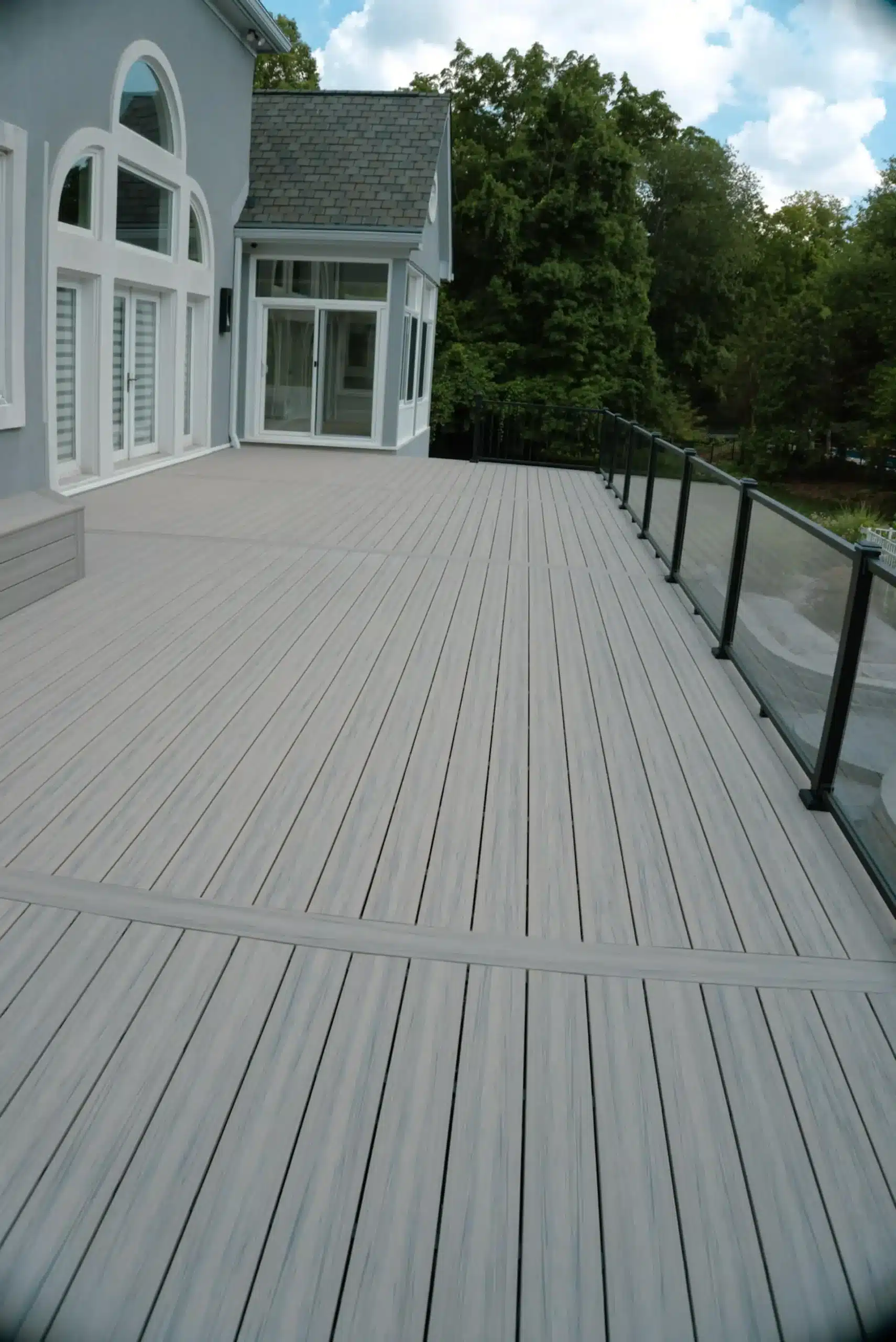
The best composite decking material depends on three things: Budget, climate, and appearance. Today’s polymer-capped boards outperform wood on every practical measure, including moisture resistance, durability, and maintenance, without the need for painting or sealing.
Understanding Composite Decking
Composite decking combines wood fibers and recycled plastics, protected by an outer polymer shell. The plastic resists moisture and insects; the wood delivers strength and texture. The result solved wood’s core problems: Rot, splintering, and high maintenance.
Key Factors in Choosing Composite Decking
- Capping Technology: Three-sided or four-sided? Four-sided capping seals the core completely, improving moisture protection, mold resistance, and long-term durability.
- Core Composition: Wood-plastic mixture or mineral-based composite (MBC). MBC is denser and exhibits minimal thermal expansion or contraction.
- Material Warranty: A 25- to 50-year fade and stain warranty signals confidence in the cap’s protective quality.
- Aesthetic Realism: Premium boards replicate natural hardwood through deep grain embossing and varied color tones.
Top Composite Decking Brands in 2026
Trex
- Identity: Eco-friendly leader, made from up to 95% recycled wood and plastic film.
- Popular Lines: Trex Transcend (high-end, 50-year warranty on Tropical lines), Trex Enhance (mid-range), Trex Select (entry-level).
- Key Feature: Widest availability and strong sustainability focus. Reliable performance across its three-sided-capped lines.
TimberTech (Azek)
- Identity: Luxury aesthetics with capped composite (PRO) and 100% capped polymer (Azek) options.
- Azek Advanced PVC: No wood material, making it exceptionally resistant to mold, moisture, and scratching. Carries a 50-year fade and stain warranty.
- Key Feature: Four-sided capping across all premium lines, delivering the most realistic wood-grain textures on the market.
Fiberon
Fiberon is the best composite decking for the money, offering premium performance without the top-tier price.
- Identity: Value-focused with strong mold resistance. Offers both composite and PVC products.
- Popular Lines: Fiberon Concordia (high-end, four-sided cap, 50-year warranty), Fiberon Sanctuary (mid-range, multi-tonal).
- Key Feature: Four-sided capping on higher-end lines at a more accessible price than TimberTech.
Deckorators
- Identity: Structural integrity through Mineral-Based Composite (MBC) technology. MBC boards (Voyage, Vault) use mineral cores instead of wood.
- Key Feature: Minimal thermal expansion and contraction, making MBC ideal for waterfront properties and extreme cold. Many products carry a 50-year structural warranty.
Envision
- Identity: Distinctive look with non-repeating grain patterns and high-end embossed finishes.
- Key Feature: Deep, non-repeating texture designed to resemble milled wood as closely as possible.
The Critical Difference: Three-Sided vs. Four-Sided Capping
Four-sided capping, found on lines such as Azek and Fiberon Concordia, completely encapsulates the core, protecting against ground moisture, airborne humidity, and mold from every angle.
Three-sided capping, common in Trex, is less expensive, but the exposed underside can be a potential entry point for moisture and mold. For low-to-ground builds or high-humidity regions, four-sided capping is worth the added cost.
Decking Profiles
- Solid/Full Profile: Dense and structurally sound. These boards feel substantial underfoot and support traditional face-screwing around the perimeter.
- Scalloped/Channeled (Hollow): Lighter and less expensive due to reduced material. Some describe a slightly less substantial feel underfoot.
Performance Features
- Scratch Resistance: Premium PVC (Azek) and MBC (Deckorators) are the most scratch-resistant composite decking material options, critical for homes with large dogs.
- Heat Resistance: MoistureShield’s technology reduces heat absorption by up to 35% compared to standard composites. Worth considering for dark-colored boards in direct sun.
- Slip Resistance: PVC boards deliver superior wet Coefficient of Friction (COF) ratings. Grooved surfaces add traction in wet conditions.

What Does Composite Decking Cost in Cincinnati?
Most contractors dodge this question. Here is a straight answer.
A fully installed composite deck in the Cincinnati area, 300 to 400 square feet with a mid-range board like Trex Enhance or Fiberon Sanctuary, typically runs between $20,000 and $35,000. A premium build with Azek or Deckorators MBC, or one with multiple levels, built-in benches, or lighting, will push higher.
Three things move the number: Deck size, board tier, and substructure condition. Two decks the same size can quote very differently if one needs framing corrections before a board goes down.
Our $100 home consultation goes toward your estimate. You will have a written number within 24 to 72 hours.
Comparing Warranties and Value
Most composite decking brands offer two warranties:
- Structural Integrity: The board won’t splinter, rot, or fail, typically for 25 to 50 years.
- Stain and Fade: The cap won’t discolor past a defined threshold, typically for 25 to 50 years.
Azek/TimberTech covers both for up to 50 years. Trex offers 25 years on most lines, extending to 50 years on Transcend Tropical.
Value tiers:
- Top tier: TimberTech Azek PVC, for maximum longevity and scratch resistance.
- Best composite decking for the money: Fiberon Sanctuary or Trex Enhance, strong capping at a reasonable price.
- Entry-level: Trex Select or Fiberon’s base lines, the most affordable upgrade from wood.
Installation Considerations
Even the best composite decking material can underperform with poor installation. Local deck builders near me and across the country point to the same culprit: Substructure failures, not the boards.
- Ventilation and Drainage: The framing must allow airflow and water to move freely beneath the deck.
- Precision: Composite boards reveal every flaw in the framing. The substructure must be level and flat.
- Spacing: Joist spacing must match each brand’s expansion and contraction tolerances.
- Fasteners: Hidden clips are the standard for a clean surface. Perimeter boards and stair treads need face screws with color-matched plugs, such as the Cortex system.
- Cleaning: Soap and water. No abrasive cleaners or high-pressure washing.
- Snow Removal: Plastic shovel only to protect the cap.
Frequently Asked Questions
Is Trex or TimberTech better?
It depends on what you are optimizing for. TimberTech, particularly the Azek PVC line, is the stronger product: Four-sided capping, superior scratch resistance, and the most realistic wood-grain textures available. Trex is the right call if sustainability matters to you and you want dependable performance at a lower price point.
What are the negatives about Trex decking?
The main one is capping. Most Trex lines use three-sided capping, which leaves the underside of the board exposed. In low-airflow installs or high-humidity climates, that is where moisture and mold get a foothold. Lower-tier lines also show wear from scratching faster than premium PVC or MBC alternatives.
Which is better, Fiberon or TimberTech?
TimberTech wins on aesthetics and long-term durability. Fiberon wins on value. If you want four-sided capping and a 50-year warranty without paying Azek prices, the Fiberon Concordia line is the closest thing to a premium product at a mid-range cost.
Is Azek or Trex better?
For moisture resistance and longevity, Azek is in a different category. It contains no wood filler, which means moisture has nothing to degrade. The 50-year warranty reflects that. Trex is still a quality board, but it is a wood-plastic composite, and the three-sided cap on most lines means it needs better airflow to perform over the long term.
What is the best composite decking for cold climates?
Deckorators MBC. Wood-plastic composites expand and contract with temperature swings, which puts stress on fasteners and causes gaps between boards over time. MBC uses minerals instead of wood in the core, so movement is minimal even through Ohio’s freeze-thaw cycles.
Why Choose The Custom Deck Guys
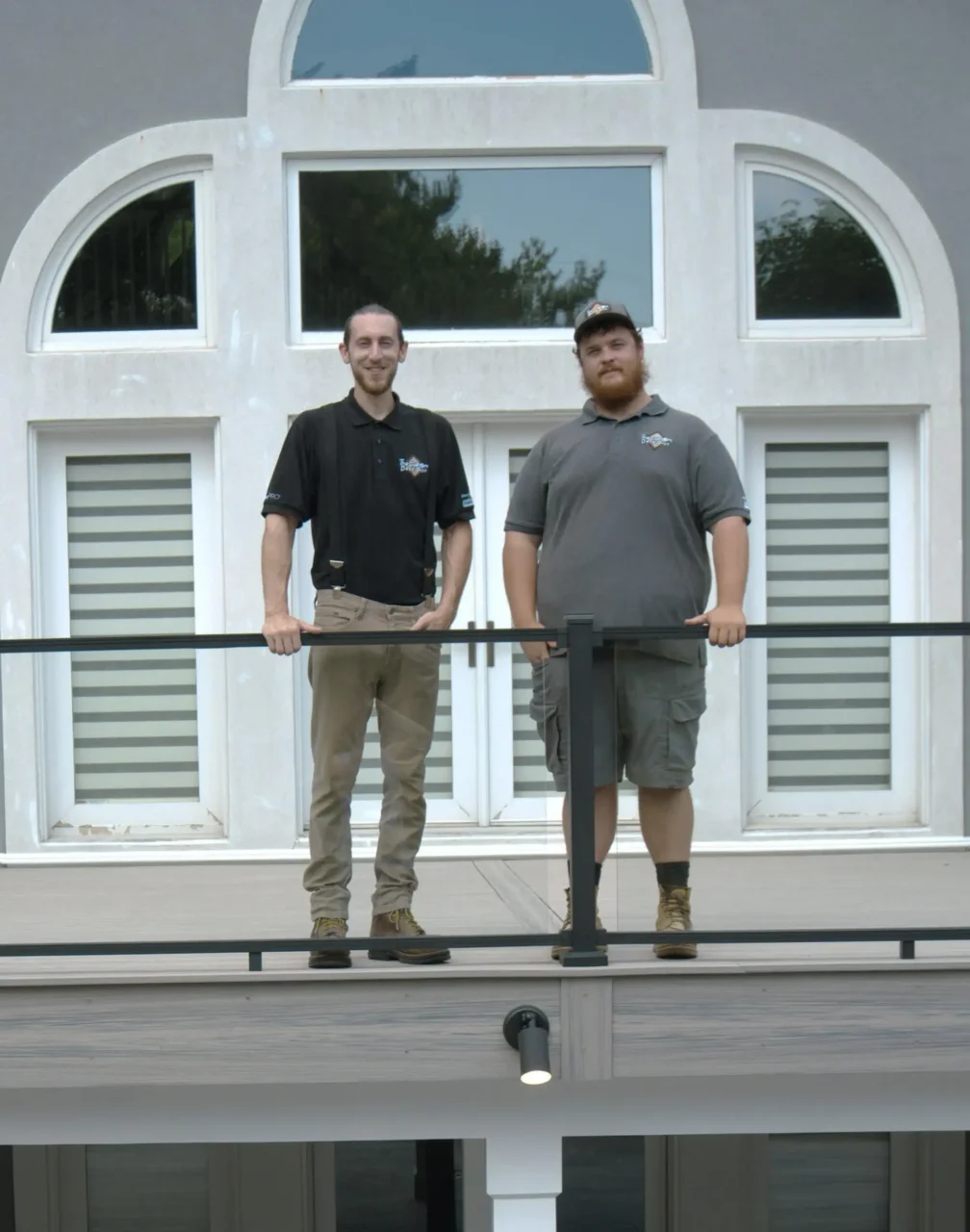
We are Luke and Chris, co-owners with over 20 years of combined experience. We partner with Trex, TimberTech, Fiberon, and Deckorators to match the right board to every project and budget.
If you have been searching for a deck builder near me who can walk you through every brand option without the sales pressure, we do that.
- Workmanship Warranty: One to five years on craftsmanship.
- Material Warranty Support: 25- to 50-year manufacturer coverage on stain and fade, with direct claim support from our team.
- Cincinnati Expertise: Every build is engineered for Ohio’s climate.
You are not short on options. You are short on a contractor who will give you a straight answer about which board is right for your yard, your budget, and your climate, and then build it the way it was designed to be built. That is the job. If you are ready to get it done right, we are ready to talk.